
By JAVIER CALETRIO
Mark Avery (Birdwatch, September 2024) argues that, with its overwhelming emphasis on ‘carbon guzzling trips abroad’, Birdfair looks more like a trade fair than a birding festival with a variety of interests. That was certainly my impression on my first visit in 2018. That year, of 396 stands, nearly half (187) were dedicated to tourism. Of these, 149 were travel and accommodation companies and 38 were national and regional tourist boards from every continent. For every stand dedicated to conservation organisations and bird clubs, there were around three for tourism, and there were nine times more stands for tourism than for books and magazines.
Mark Avery rightly notes that three decades ago an emphasis on exotic wildlife holidays fitted the mood of the times. A global environmental movement was taking shape and we – understandably but often wrongly – thought that through our travels we could ‘connect the world’ and ‘save nature’. But even if there ever was any truth in this, the world has moved on. Arguably the most consequential change has been growing awareness about the climate crisis which became one of the key factors that led the Leicestershire and Rutland Wildlife Trust (LRWT), the organisation responsible for Birdfair, to announce in November 2023 that it had decided to stop running the event. Among other reasons behind its decision, LRWT argued that ‘The carbon footprint generated both by the event itself and the activities it promotes does not now fit well with our own strategy towards tackling the climate crisis.’ Running an event so focused on flying-dependent tourism posed a ‘reputational risk’.
The world has moved on in other ways too. Supporters of Birdfair’s emphasis on tourism argue that without tourists biodiversity rich places would disappear and local economies would suffer. The tacit assumption here is that only affluent western tourists matter and that domestic tourism in the destination countries is irrelevant. But this ignores profound shifts in the global economic geography. As an example, the European Union represented 30% of the global economy in 1980 but only 14.46% in 2024. Moving in the opposite direction, the group of countries known as BRICS (including Brazil, Russia, India, China, South Africa, Indonesia) have gone from representing 16.9% of the global economy in 1995 to representing around 40% in 2025. Although unequally distributed, the result of this economic prosperity is many more people who are able to travel: middle classes have expanded from around one billion in 1989 when Birdfair was created, to around four billion in 2024. If current forecasts are correct, this figure will rise to five billion by 2030.
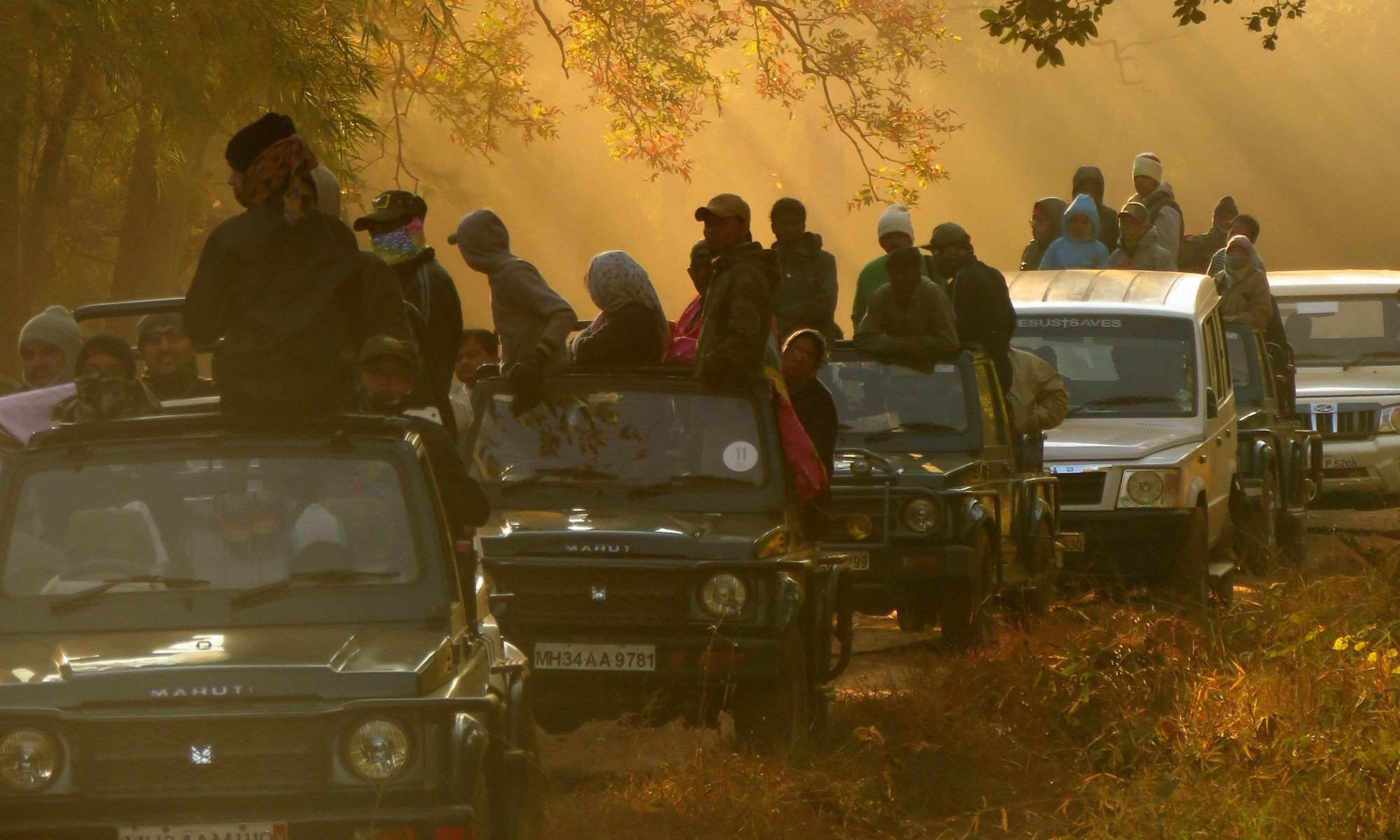
Reflecting these changes is the growth of domestic tourism, a phenomenon that until the COVID pandemic had been largely neglected by national tourism boards which were more interested in the foreign currency brought in by international tourists. According to a 2020 report by the World Tourism Organisation, the global domestic tourism market is six times bigger than the international market. The share of domestic trips to international tourist arrivals was 99 to 1 in India, 97 to 3 in Brazil, 94 to 6 in Iran, 92 to 8 in Peru, 89 to 11 in Azerbaijan, 87 to 13 in Argentina, 85 to 15 in Romania, 80 to 20 in Malaysia. These figures do not include city dwellers who regularly visit their rural hometowns, or those who move between cities and the countryside. Yes, international tourists generally bring in more money per person, but the benefits of domestic tourism are spread over a larger number of small businesses and provide resilience in the face of crises such as the COVID pandemic which grounded aviation in many countries.
Across the world, a myriad of small independent businesses exist to service domestic tourist demand. Few of these businesses explicitly regard themselves as being part of the ‘ecotourism’ industry and even fewer depend on tourists from Europe, North America and other high-income countries. When advocates of Birdfair argue, as Stephen Moss does in his response to Mark Avery, that without tourists family companies would go bust, it is important to clarify that while this may be the case for companies specialised in international tourism which cannot adapt, becoming dependent on international tourism does not have to be a necessity – it often is an explicit choice with well-known risks. When the COVID pandemic grounded flights and struggling tour companies called on people in Kenya and Tanzania to visit the national parks, it became embarrassingly obvious that the absence of local tourists until then was not due to their lack of interest, but the explicit policy of park authorities and wildlife tour operators to prioritise high-income foreign tourists who could afford the prices that kept locals away. Speaking to the New York Times, Harriet Akinyi, a Nairobi-based travel writer, said ‘My eyes just rolled when I saw that (call to local tourists). It’s hypocritical that it took a pandemic for them to realize that they have to cater to the Kenyan market as well, not just the international market.’ Birdfair helps to promote businesses and tourism boards targeting a segment of the British market, and these companies and boards represent a very small fraction of a much wider global tourism economy in natural areas.
Some may argue that even with local tourism, we, relatively affluent tourists, are still needed because by meeting us, locals learn to appreciate and protect their environment. But the idea that citizens of the UK or other high-income countries are the spearhead of a global environmental consciousness is not supported by evidence. According to a survey conducted in G20 countries in 2024 by Ipsos and commissioned by Earth4All and the Global Commons Alliance, ‘Concern about the state of nature today was generally higher in Brazil, Turkey, Argentina, Indonesia, Mexico, South Africa, India and Kenya than in high income countries: Europe, Japan and Saudi Arabia.’ When asked about how quickly the world needs major action to reduce carbon emissions, 69% of people surveyed in the UK agreed that we must ‘Act immediately, within the next ten years’. The percentages were 91% in Mexico, 83% in Kenya and South Africa, 80% in Indonesia and Turkey, and 81% in Brazil.
By now it should be clear that I am not arguing that people should stop travelling to enjoy birds. My point is that we need to rethink where and how we travel for two main reasons. Firstly, global tourism’s contribution to global warming is substantial and continues to grow, from 8% in 2013 to 8.9% in 2019. There is no way to stabilise temperatures without the tourism industry playing its role. In a recent paper published in Nature, aviation and climate researcher Stefan Gössling and his colleagues argue that if the tourism sector is to align with the Paris Agreement target of limiting global warming to +1.5 degrees, it has to reduce demand by 10% annually.
Second, there is a large disparity in per-capita tourism footprints both between and within countries, stemming from differentials in affluence between countries, and income inequality within countries. Tourists from wealthy countries have larger tourism-related footprints, and the wealthiest citizens, irrespective of their country of residence, are the main consumers of tourism and are responsible for a disproportionate part of tourism emissions.
So what do we do about the remaining and rapidly diminishing carbon budget for tourism? What are the implications for conservation organisations that want to use tourism as a conservation tool? One would assume that, as institutions informed by science, conservation organisations accept the reality of carbon budgets and agree with the International Panel For Climate Change (IPCC)’s suggestion that a ‘fair contribution’ to reducing emissions must acknowledge equality and responsibility. Yes, the growth in domestic tourism is contributing to growing emissions in tourism but, as Stefan Gössling and his colleagues argue, because domestic tourism is enjoyed by more of the world’s population, ‘focusing on limiting continuing growth in international air travel rather than domestic tourism would offer a more socially equitable approach to addressing this challenge.’ This approach to reducing emissions shifts the focus to the small minority of frequent flyers with disproportionately large carbon footprints. According to the 2022 IPCC report on mitigation, only 2–4% of the world’s population flew internationally in 2018, with 1% responsible for 50% of CO2 from commercial aviation. In the UK 15% of the population takes 70% of all flights.
There is an important generational dimension here. Stephen Moss alluded to this in a November 2022 article in Birdwatching. Writing about British birders, he argues that the ‘ecotourism industry may be on a downward slope…’. ‘We may have already have seen ‘‘peak ecotourism’’, the people who go on bird and wildlife tours are the over-60s, who for the past two to three decades have tended to be retired, healthy, and with plenty of disposable income… future generations of people of that age may still be working to pay off debts or fund their old age and are likely to have lower disposable income – along with less leisure time…’
Importantly, though, it is not just a matter of income. In a thought experiment conducted in 2019 aimed at estimating how lifetime carbon budgets vary by age, climate journalist Zeke Hausfather found that, if warming is to be limited to 1.5 degrees, a child born in 2017 would have a carbon budget four times smaller than its parents and eight times smaller than its grandparents (born in 1950). ‘This is because most of the allowable emissions have already been used up, meaning young people will not have the luxury of unmitigated emissions enjoyed by older generations.’ In his response to Mark Avery, Stephen Moss claims that Birdfair cares for younger people and that their presence is a beacon of hope. But this claim sounds hollow when the event grants such prominence to holidays enjoyed by a generation which has already consumed more than its fair share of the global carbon budget.
The logical conclusion to raising concerns about the climate impact of Birdfair, both in terms of the activities it promotes and the wider damage caused by helping to normalise high-carbon lifestyles, is not that people stop travelling and biodiversity rich places are lost, as Moss argues. Instead we can acknowledge that the world has moved on, that affluent western tourists are not the only ones travelling or caring about nature, that ‘ecotourism’ is not necessarily what it says in the tin, that there are other ways of conservation fundraising, that we can still travel to other countries, but that we can do so differently. Any hope that young people have about their future deserves to be grounded in meaningful actions informed by science, not in business as usual. Birdfair remains stagnated in a vision of the world that may have made sense in 1989. But the longer it denies the need to change the more it will struggle to dispel the growing perception that today it has become a reputational risk.
A final reflection
Birdlife International, a partnership of 123 national organisations, is the recipient of the funding generated by Birdfair. One of its four strategic areas of work is education and engagement through bringing people closer to birds. This, the organisation hopes, will encourage people to ‘support and be champions for nature.’ The organisation’s website also notes that ‘We push for a just and equitable society where we acknowledge that nature is fundamental to our wellbeing.’ One would therefore assume that Birdlife International thinks that the opportunity to enjoy nature should be available to anyone, irrespective of their income level, and that, accordingly, the remaining carbon budget for tourism should be used in a way that enables those who do not fly for holidays to enjoy birds.
Martin Harper is the current CEO of Birdlife International. In 2020, while Global Conservation Director at the RSPB, he wrote that because of concerns about climate change he decided in 2004 that he would no longer fly abroad for holidays. Knowing that Birdlife International prides itself on following the science, it is difficult to understand why, under the leadership of Martin Harper, it thinks that promoting high-carbon lifestyles for a small minority is a legitimate way of raising funding for conservation. This celebration of high-carbon holidays is difficult to reconcile with the scientific evidence about the role that lifestyle change plays in enabling wider systemic change to reduce emissions.
Photo: Tourists at the Tadoba Andhari Tiger Reserve, India / Namrata Shah
 Low-Carbon Birding
I whole-heartedly agree with this piece. When I began birding, I was enthralled by the realisation that birds were so mobile that I could experience the wonderful variety of nature by opening my eyes to the movements of birds that were seen around my home, which gave a very deep experience that went beyond the simple species list. Meaningful, enriching experiences do not have to be dependant on travel and planned itineraries to tick off a pre-determined set of species. Of course, businesses that have an income stream dependant on travel paint a different picture and this seems to be the driver for birdfair now but strip away economics and focus on the natural world and there is a wholly different way of seeing things that you are offering. Several years ago I also made a decision to never fly again, based on many of the points you highlight.